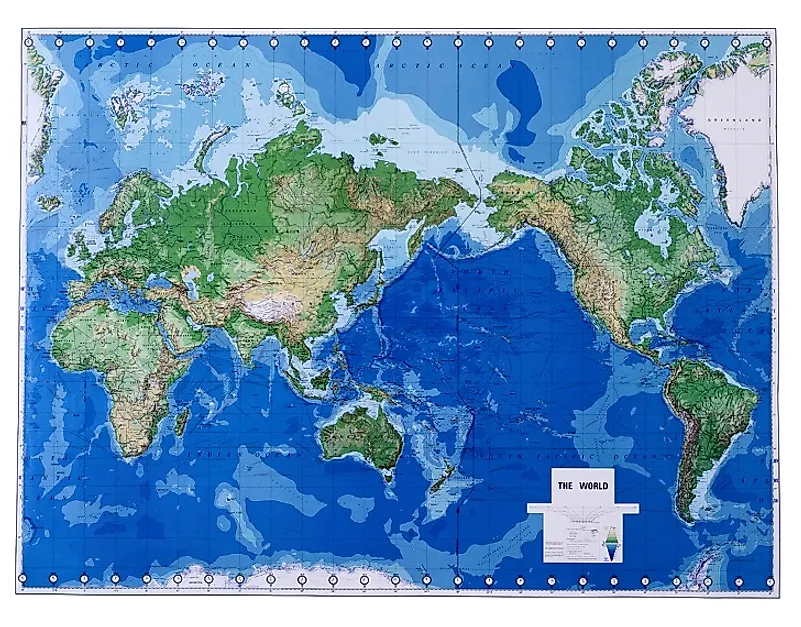
The term geography was coined by the ancient Greeks who not only created detailed maps and accounts of places around them but also illuminated why and how human and natural patterns varied from one place to another on Earth. Through the passage of time, the rich legacy of geography made a momentous journey to the bright Islamic minds. The Islamic Golden Age witnessed astounding advancements in the geographical sciences. Islamic geographers were credited with groundbreaking discoveries. New lands were explored and the world’s first grid-based mapping system was developed. The Chinese civilization also contributed instrumentally towards the development of early geography. The compass, a traveling aid, devised by the Chinese, was used by the Chinese explorers to explore the unknown.
A new historical chapter of geography opened during the “Age of Discovery”, a period coinciding with the European Renaissance. A fresh interest in geography was regenerated in the European world. Marco Polo, the Venetian merchant traveler, spearheaded this new Age of Exploration. Commercial interests in establishing trade contacts with the rich civilizations of Asia like China and India became the primary reason for traveling during this period. Europeans moved ahead in all directions, discovering new lands, unique cultures, and natural wonders in the process. They also began to colonize new lands towards the latter half of the Age of Exploration. The tremendous potential of geography to shape the future of human civilization was recognized and in the 18th Century, geography was introduced as a discipline of study at the university level. Based on geographical knowledge, the human society discovered new ways and means to overcome the challenges posed by nature and human civilizations flourished in all parts of the world. In the 20th century, aerial photography, satellite technology, computerized systems, and sophisticated software radically changed the definition of geography and made the study of geography more comprehensive and detailed.